

Filed Under:
There’s a common myth in entrepreneurship: if you get funding, you’re set.
It sounds simple. Raise a first round of venture capital, and success will follow.
Here’s the reality: investors typically fund less than 1% of the companies that pitch them. Getting funded means you cleared a high bar—but that bar isn’t “this business will succeed.” It’s “this business fits our fund’s specific thesis and risk profile.”
And then? Less than 50% of companies that raise a first round ever raise again.
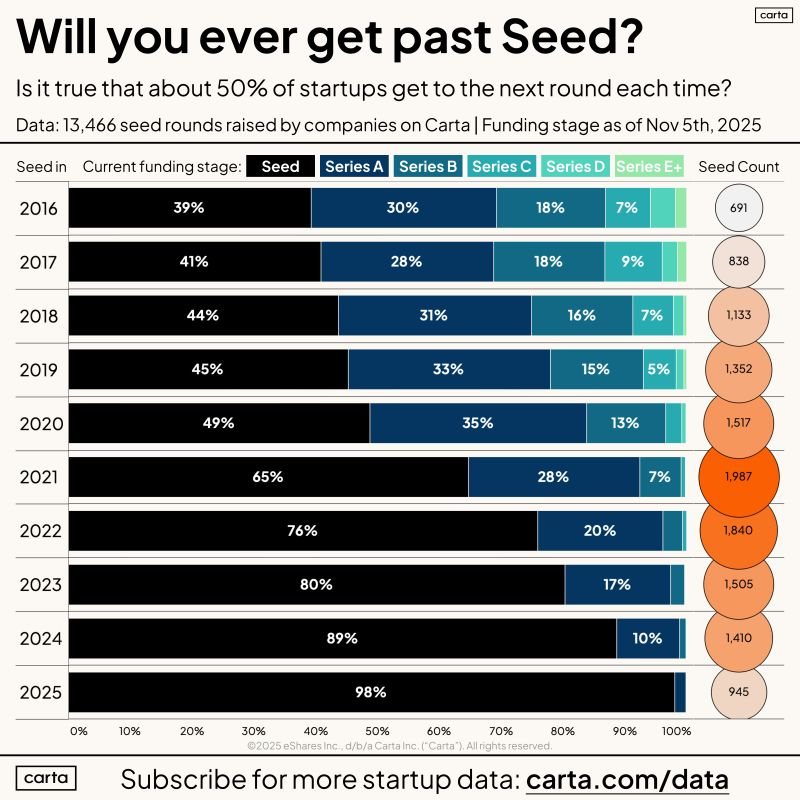
Funding means you’re aligned with what an investor needs. It doesn’t mean you’re on a path to building what you need.
The real question: What do you want?
Most entrepreneurship advice assumes the problem is access to capital.
But that’s rarely the actual constraint.
The real constraint is clarity. Before you can find partners to support your growth, you need to answer a more fundamental question: What do you actually want this business to do for you?
Are you trying to:
- Build something you can sell in 3-5 years?
- Create a business that pays you well indefinitely?
- Grow slowly while maintaining control?
- Scale rapidly to dominate a market?
These aren’t just philosophical questions. They have profound implications for every decision you make: who you hire, how you price, which opportunities you pursue, and yes-whether you should raise capital at all.
But if you don’t know where you’re going, any road will take you there.
When success metrics don’t match your reality
Here’s what happens when you don’t define success for yourself: other people define it for you.
Institutional investors define success as $100M+ in revenue—the threshold that typically leads to unicorn valuations and makes their fund economics work. That’s not arbitrary; it’s how their business model is designed. But it may have nothing to do with what you’re actually trying to build.
Vendors will assume you want to “scale” and sell you solutions for a business model you haven’t validated yet.
Co-founders might be optimizing for a quick exit while you’re trying to build something sustainable.
Your lawyer, your accountant, your business coach—everyone has assumptions about where you’re headed. And if you’re not clear on your own goals, you’ll end up paying for outcomes that don’t actually move you toward what you want.
Reality navigation: Making decisions that actually serve you
Don’t chase someone else’s dream.
Instead, try what we call reality navigation: the practice of making business decisions based on your definition of success and actual data about what’s working.
This means:
- Getting clear on what you’re optimizing for (not what you “should” want, but what you actually want)
- Understanding the trade-offs inherent in that choice
- Building visibility into whether your current actions are moving you toward that outcome
- Adjusting based on what you learn
Funding is a tool. It’s not a destination, and it’s not a validation of your worth as a founder. It only helps if you already know what you’re trying to achieve and can align those resources to your actual goals.
For some businesses, raising capital might make perfect sense—if you need to move fast to capture a market window, or if you’re building a capital-intensive innovation. For others, it could be an expensive distraction from the work of building a profitable, sustainable business.
But you can’t make that call until you know what you’re building toward.
You deserve clarity
At Fric, we start with a different question than most planning tools: What are your goals?
Not “what should your revenue be” or “how fast should you grow”—but what do you actually want this business to do for you?
Then, as you build your plan, we reflect those goals back to you. This creates a feedback loop that helps you evaluate every decision—hiring, marketing spend, pricing, yes or no to that big opportunity—against what you said you wanted.
Nobody else will ask you this question. Most people will make assumptions about what success looks like for you.
Getting funded isn’t the definition of success. Success is knowing what you want and making decisions that consistently move you toward that vision—even when (especially when) those decisions look different from what everyone else is doing.
** Note: All em dashes in this article are mine.
When you are ready to move from insight to action, Fric helps you build a plan rooted in reality. It connects assumptions, actions, and actual results so you can see what is really driving cash and profit. Start a free two-week trial and explore Fric at your own pace.
SHARE THIS ON